Tuesday, April 25, 2017

Libraries and the Homeless

by Karen Nicholson
library-922998.jpg
Homelessness is an important issue for all libraries.  I have mostly seen articles and discussions that focus on public libraries and their homeless population.  They talk about the rules that are in place, sometimes to keep the homeless out of the library, which often includes not being allowed to sleep in the library and not being allowed to stay if they have a strong odor.  One way to help this population is to bring mobile showers to the library site and allow the homeless to use it and basic supplies for free.  According to Ruhlmann, this has already happened within the San Francisco Public Library system (43).  Another way to get around strict rules and regulations within the library, that may not be enforced fairly across the board is to stick to one rule:  “If you’re doing something that interferes with someone else’s use of the library it is not allowed” (Ruhlmann, 42).
Homelessness is also a very important issue for school libraries.  I work in a public middle school library and I know that there are several students within the school’s population that are homeless.  I do not know exactly who they are, nor do I try to search them out.  Instead, I try to make the library as welcoming and safe for all students.  I try to enforce all of my rules fairly and across the board.  I also try to make as many connections as possible with the students that visit me.  I will take the time to chat with a student when they are visiting the library and try to say hello to familiar faces when I seem around campus.  I have a large number of students that visit the library before school.  Most are sitting at tables talking to friends and checking their phones.  All 10 of my computers are filled with students playing games and interacting with their friends.  At least 5 of the computers have 3 or 4 boys crowded around watching what the others are doing.  (We have a computer lab that is open before school for homework.)  I usually have several tables with students finishing homework or reading books.  If I see someone breaking the rules I ask them to leave, but tell them, every time, that they are welcome back, either at lunch or the next day, depending on the severity of the incident.  “School, especially the school library, may be the only thing a homeless student can count on as a place that is safe, comfortable, and full of books, magazines, online resources, and more that can bring enjoyment and respite from the daily stresses of his or her life” (Adams, 53).
It is important for all students to have access to books and textbooks, especially if they are homeless.  School libraries should try to be flexible when it comes to their homeless students.  They should still be allowed to check out books to be used away from school.  If the books are not returned, and a reason is given (like they no longer have access to the books), their fines should be waived and allowed to continue to having access to books and checking them out.  According to Adams, school librarians need to keep in mind that it is not the student’s fault for no longer having access to a book (53).  It is also important to make sure there are current, quality books in the library about the homeless, especially relating to children.
Here is a video on successful student who was a homeless high school student:

Sources:
Adams, Helen R. "Serving Homeless Children in the School Library -- Part 1." School Library Monthly, vol. 27, no. 3, Dec. 2010, pp. 52-53. EBSCOhost, ezproxy.palomar.edu/login?url=http://search.ebscohost.com/login.aspx?direct=true&db=aph&AN=55620520&site=ehost-live&scope=site.
"Attending School As A Homeless Child." YouTube. Stories by Stassy, 1 Apr. 2015. Web. 25 Apr. 2017.

Ruhlmann, Ellyn. "A HOME to the HOMELESS." American Libraries, vol. 45, no. 11/12, Nov/Dec2014, pp. 40-44. EBSCOhost, ezproxy.palomar.edu/login?url=http://search.ebscohost.com/login.aspx?direct=true&db=aph&AN=99206614&site=ehost-live&scope=site.

Social Networking and Libraries

Social Networking and Libraries

by Karen Nicholson

web-page-2084779.png
I follow a lot of libraries and similar groups online at Facebook, Twitter, and Instagram.  I love how funny they can be and how they can connect books and reading to so many other activities and ideas.  I think that social media is an important tool that every library can utilize.  It is a way to connect and interact with their patrons, especially with younger patrons like teens and young adults.  I love it when libraries ask what people are currently reading.  This gives the other followers a chance to see what books patrons are interested in and maybe try out some new books to read.
According to Buono & Kordeliski, social media is a great way to provide transparency, engagement and exposure for libraries (30).  Transparency allows you to show your users how you are using funds in the library and why.  You can show off new book purchases, talk about staff members, or any big ticket items you purchased for the library.  Engagement helps you to connect with your patrons and hopefully get them to physically visit the library.  Social media is great way to engage and interact with teens at a public or school library.  You can help them feel included in what is going on in the library.  Exposure allows you to get support and bring in other people who may be interested in what the library has to offer.   “It creates a new space for libraries to have value.  Beyond their four walls. -Jeremy Graybill” (Dankowski, 41)
It is really nice that there are so many types of social media now, and they can be used in different ways, and all are useful for libraries.  Facebook is great to let your patrons know of upcoming events or contests.  It is also good for longer posts with more information.  Twitter is good for quick updates.  A place to showcase stuff that is going on at the moment that patrons may be interested in.  You can really build a conversation with younger patrons using Twitter.  Find a way to include a fun hashtag that they would want to add to.  Instagram is a great way to invite patrons to see what goes on in and around the library.  The library can showcase new books and some behind the scenes activities.  Snapchat is another way to connect with younger patrons via images and videos.  It is similar to Instagram except that the posts only stay up for a limited time.  Pinterest is a platform mainly used by women and would be a good way to increase interaction with that population.  You can create a board featuring new books, fun book covers, or even unusual titles.  
One thing to keep in mind is that it is important to change what you post on different platforms.  I often follow libraries and users on 3 different platforms and if the posts are the same on each I am really bored seeing it the third time.  Keep in mind the strengths of each social media platform before you post.  If it is an event or time sensitive post, switch it up a little for each platform to make it interesting.
Want to check out the San Marcos Middle School Library Instagram? You can find it @smmslibrary
Sources:
Buono, Michael P. and Amanda Kordeliski. "Connect, Create, Collaborate." Young Adult Library Services, vol. 11, no. 2, Winter2013, pp. 30-40. EBSCOhost, ezproxy.palomar.edu/login?url=http://search.ebscohost.com/login.aspx?direct=true&db=aph&AN=85125538&site=ehost-live&scope=site.
Dankowski, Terra. "How Libraries Are Using Social Media." American Libraries, vol. 44, no. 5, May 2013, pp. 38-41. EBSCOhost, ezproxy.palomar.edu/login?url=http://search.ebscohost.com/login.aspx?direct=true&db=aph&AN=87453442&site=ehost-live&scope=site.

Libraries as Social Hubs

Libraries as Social Hubs

by Karen Nicholson

I am the librarian at San Marcos Middle School.  I want my school library to be thought of as a fun and safe place in the school.  I want it to be a place to read a book, play a video game, socialize with friends, do some homework, or play a tabletop game.  I want it to be a refuge for the kids that need a place to just be themselves.  This library is not the shushing and be quiet type, unless it is reading time during class library visits or homework time after school.  The most popular games in our library are UNO, chess and checkers.  I love it when a student asks me to play a game of UNO with them.  It gives me a chance get to know the students better, have some fun, and make new connections with the students that inevitably join our game.  
I’m almost at the end of my first year as the library media technician at San Marcos Middle School.  I am absolutely loving my job and I am looking forward towards what I would like to add to the library in the next few years.  The first is to start a book club.  I know of several teachers that are also interested in this, and I would happily host it in the library.  We could read a book every few weeks and meetup to talk about it.  I would want the students to have input on what books we read, and maybe have them each take a turn suggesting a book.  I would also like at least one period of time to have each student to read different books they are interested in and let the other students know why they picked it and what they thought about it.  
The other activity I would like to start up in the library would be a tabletop gaming group.  I am a gamer, I LOVE to play video games and to play analog tabletop games with my friends and family.  I find video games to be a solo adventure for me, but tabletop games are very social and a great way to build relationships with friends.  Almost every weekend I get together with some friends and we play a tabletop game.  We often re-play our favorites and enjoy trying out new games.  There are so many great games out there that would be fantastic to play in a middle school library.  So many students are playing games on their phones, or on the computers in the library.  I would like them to get more involved in playing games with each other.  According to Alvarez, “modern tabletop games have been proven more engaging than many of the older games, but they also have been proven to leave fewer feelings of resentment or discouragement if gaming outcomes are not favorable.  In fact, students leave the table strategizing better outcomes and looking forward to the next challenge” (42).  These games go beyond the luck factor of popular older games like Monopoly or Risk.  There are many modern games that use more cooperation, include more variety in decisions needed to be made to be successful, and have less waiting between player turns (Alvarez, 45).  Using a cooperative game like Forbidden Island can be a way for students to feel successful, but not the pressure to having a goal of defeating their opponent (Alvarez, 45).  They can work on their teamwork skills, while having a lot of fun.  Every student that is playing can give important input on the best way to win the game.  When I start up this group I plan on starting with Ticket to Ride and trying other games after that.  Based on the games I have played with my friends over the last several years I would recommend the following to try with students in a library setting:  Carcassonne, Descent, Dominion, Fluxx, Bang!, Forbidden Island, Legendary, Machi Koro, Mysterium, Pandemic, Qwirkle, Sushi Go!, Settlers of Catan, Takenoko, Ticket to Ride, Tokaido
BoardGameGeek is a fantastic website for more information on tabletop games.

Sources:
Alvarez, Vivian. "Engaging Students in the Library through Tabletop Gaming." Knowledge Quest, vol. 45, no. 4, Mar/Apr2017, pp. 40-48. EBSCOhost, ezproxy.palomar.edu/login?url=http://search.ebscohost.com/login.aspx?direct=true&db=lxh&AN=121512460&site=ehost-live&scope=site.

BoardGameGeek. N.p., n.d. Web. 25 Apr. 2017.

LIBRARIES as Social Hubs

Darla Mulder
LIT 130
April, 2017

Image result for social hub illustration books
An old school, last century library comes to my mind.    What used to constitute a library?  I would see  sterile, neat rows of books, hear the whispering, shushing older woman with thick glasses. She is the one there who scrutinizes movements,  

"Go outside to talk!" 

Things have CHANGED.

The change of the physical appearance or form of books meant that libraries met the digital world. 

 Some have downsized their need for "as many" hard-bound books and have taken a liking to the new available floor space and the ease of storing many more digital works.   Emerging is a perpetual desire to reorganize, rethink, remission the role and embrace patron's social activity.

Even though the nature of computers at one time threatened people, thinking that de-socialization would occur, libraries in the community embraced the challenges and saved two problems.  There is more library activity engaging people to be together and share, exchange, talk to each other. 

Now they are in the form of new community programs, chat rooms, art rooms, museum rooms, task force rooms, study halls, lecture halls, movies, even sharing lunch and coffee.

Community information delivery needs have shifted slowly. The mainstream library's role seems to be changing. It is argued by some people that digitization is the force.    Others see how a library is an affordable meeting place and not everyone has a computer. The optional computer headsets patrons wear block unwanted sounds, and a more inviting arena for ideas has slowly emerged. Rooms are welcoming it.

The articles listed below discuss Smartphones and tablets which offer digital technologies such as geo-location, audio, video, photo and web technologies. They feature much vocabulary that users engage in with established social networks and photo-sharing sites: All are able to share so much more content than ever before with more people both inside and outside the walls and the geographical boundary lines. (Hopkins)


As the libraries stress to serve beyond their county or city line boundaries, they are offering more activities and programs to gather the local neighborhood and community inside its walls.  They want to become a cultural and learning hub of their communities.  With the smartphones and tablets and their associated apps, more sharing activities exist between individual patrons both outside and inside the boundary of the library walls. (Carlson) 


Crossing Borders with the library is a great video from a library in Denmark

The articles listed below talk about how users in  libraries are enjoying the social hub technologies using devices in the participatory culture context – tapping into new communities, engaging with their stakeholders in meaningful ways, enhancing their social impact and transforming their essential roles in today's knowledge society.

Finding partners for social events and accessing information between them is a new techno-social set skill that libraries are administering.  They continue to plan a seasonal program which invites  and triggers the public interest. In order to maintain the information hub, the social hub, and the sharing hub, they invite the learning curve of an ever changing social need to "hub together".  (Harris)


BIBLIOGRAPHY

Carlson, Scott. "The Library of the Future." Chronicle of Higher Education 52.16 (2005): B23. Academic Search                             Premier. Web. 24 Apr. 2017. Accession Number: 19190222

Harris, R., Mayo, A., Prince, J. D., & Joan, M. (2013, October). Creating shared campus experiences: The library                 as culture club. Journal of the Medical Library Association, 101(4), 254-256. doi:10.3163/1536                           -5050.101.4.005  Accession Number: 91555530


Hopkins, P., Hare, J., Donaghey, J., & Abbott, W. (2015, February). Geo, audio, video, photo: How digital                    convergence in mobile devices facilitates participatory culture in libraries. Australian Library Journal,                   64(1), 11-22. doi:10.1080/00049670.2014.984379 


Senville, W. (2009, September). Public libraries: The hub of our communities. Aplis, 22(3), 97-103. Retrieved April       24, 2017, from Academic Search Premier.
         Accession Number: 44266947; Senville, Wayne; Source Info: Sep2009, Vol. 22 Issue 3, p97
Libraries and the Homeless
Darla Mulder
LIT 130
April, 2017

Libraries and the Homeless

Related image

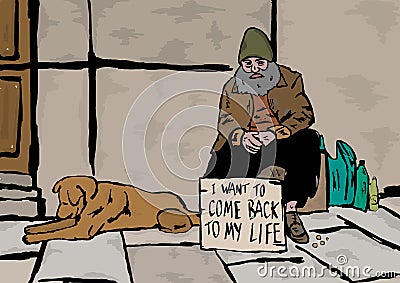
Homeless people exist in every city, you could see a few of them every day. They are homeless for individual reasons -- throughout the world.  None of them planned on it.

A homeless person can be anyone.  Functionally illiterate 25 year-olds who have no support system have this misfortune.. A 45-year-old college educated person with a large family suddenly is in their car. Chronic longevity or perpetual, a rare occurrence or a sudden, large loss, it exits.  Sometimes it is in -you-face, asking for a handout, some difficult to spot.   Some are not counted at all.

  I can't imagine not knowing where I will rest my head, how to pay for my next meal, what I must do to stop drowning in bad luck.    

They have lost practically all their comforts and amenities. Some stand out with dirty or wrinkled clothing, their hair uncombed, face unshaven. Others will blend in and find places to tidy themselves up.  I have been surprised how often I hear that someone who I just spoke with had been homeless at one time or the other.

What can we do?  What entity can help? Even though the thought of being homeless horrifies us, we have problems assisting others who do experience homelessness.  

Practically all have not been able to carry their ways and means of information needs, nor can they afford information, books, or record directions/instructions. A library would normally hold civic information for them or ways to help them find resources.

  Any patron who walks into the library is treated with the same cordiality, respect, and all have to obey the rules.  Different libraries abide by different rules in regard to their protocols handling a homeless person wandering in for the first time.

Some work outside normal thinking and use their imagination.

There are handfuls of people in different geographical areas who see an opportunity to bring several civic entities together.

A man named Colbert Nembhard in New York has a partnership with a homeless shelter.

In September of 2016, according to a New York Times article, (from Opposing Viewpoints) the Library of Congress acknowledged that a shelter was a best place to assist those who had low literacy.  At this particular venue, even though many who had fallen off the secure track of roofs-over-the head, they still LOVED books.    There was a bookmobile that would roll up to the shelter every morning, calling it a "rolling bag."   Mr Nembhard wants the kids to have a lifelong relationship with libraries, and therefore bringing to library to them offered them an imaginary refuge.

An exploratory study exists and can be found in the Journal of Poverty and Social Justice, 2012, written and compiled by K.A. Anderson and C.D. Simpson.  In the study a public library staff helps homeless while in the midst of needs and concerns. 

After being surveyed, it was found that the library staff needed more training to address the specific and complex needs of homeless people. It is hoped that in the future, additional training can help staff know exactly how to link these unfortunate beings with the help they need.


There is a way to distribute knowledge and it appears a peaceful tool is to hand them readable books, newspapers or magazines.  Anything they might relate to and have connection with.  The morning gathering with a schedule appeals to some homeless areas in certain groups; the goal is to let them digest the ideas in the books, grasp some knowledge and translate it to each other if needed or wanted.


In London, a Quaker Homeless Action set up a mobile library in 1999 and lends books to more than a thousand homeless people a year.  Everyday, more than 30 gather in the churchyard and receive a morning allotment of used books for the homeless to grasp and take comfort in. From there, the homeless are able to share information with one another, ask for information, and have been able to shed the feeling of homelessness, isolation and to spark companionship.

Public libraries can support families experiencing homelessness,  according to an article by V.C. Terrile, in the Journal of Children & Poverty.   Library providers and agencies can operate together, collectively,  to support many various needs. The article discusses how homelessness is the result of many interconnected social and economic conditions. A library stores information in forms of city, county, state, and national assistance plans.

In San Diego County, homeless are regarded for safety just outside the City Library:
See this video:  https://youtu.be/s828AnBUAM0

However, there is an old library that city does not want for the homeless shelter.  This is an article about it.  The local television news had it on April 25th, 2017.
http://www.sandiegouniontribune.com/news/politics/sd-me-homeless-downtown-20170425-story.html


Below find the audio which explains how libraries become a temporary refuge for the homeless
https://youtu.be/FYiEEhhrFh4


A librarian's guide to homelessness:


Bibliography Below:


Anderson, K. A., Simpson, C. D., & Fisher, L. G. (2012, June). The ability of public library staff to help homeless      people in the United States: Exploring relationships, roles and potential. Journal of Poverty & Social Justice,            20(2), 177-190. doi:10.1332/175982712X652078 


Rhodes, Emily. "Words on the street: An afternoon with a mobile library for rough sleepers." Spectator, 15                           Oct.2016, p. 20. Opposing Viewpoints in Context, link.galegroup.com/apps/doc/A466511289/OVIC?                     u=cclc_palomar&xid=a7209e47. 

Stewart, N. (2016, November 25). Devoted to Teaching Homeless Children a Lasting Love of Books. New York            Times, p. A24(L). Retrieved from        http://link.galegroup.com.ezproxy.palomar.edu/apps/doc/A471361709/OVIC?u=cclc_palomar&xid=ff70b818

Terrile, V. C. (2016, September). Public library support of families experiencing homelessness. Journal of Children            & Poverty, 22(2), 133-146. doi:10.1080/10796126.2016.1209166 


Monday, April 24, 2017


­Libraries and the Homeless
By Lori Schafer 

Fact Sheet:  Homelessness in California
http://stran.senate.ca.gov/sites/stran.senate.ca.gov/files/homelessness_in_california_nov_2015.pdf

On the television news I heard that the population has doubled in the past few years in San Diego. With the rising costs of housing, inflation, stagnant wages and housing shortages it would seem that this is affecting all cities throughout the country. There was also a follow-up news story on KPBS radio on how the San Diego Public Library was training it’s personnel on how to help and interact with the homeless population that uses the libraries as sanctuaries from the streets on a daily basis. I was so moved from hearing this story that I thought this would be a great library to seek employment. Public libraries have always been a safe haven for people who have nowhere else to go and now with all of the additional services being offered such as computer & internet access, workshops for all ages, employment help, free tax preparation assistance, etc. they are increasingly becoming involved in the city’s efforts to reduce homelessness. As mentioned in an online article titled Enlisting Public Libraries to Help Fight Homelessness, “Libraries are safe, open for long hours, and offer everything from public bathrooms to a place for people to search for online job listings. I think libraries are fully equipped and ready to address community needs, and this is another community need” (Quinton, 2016).

Public libraries are increasingly training library staff and hiring outreach workers to handle the homeless patrons who struggle with mental problems, addictions, depression, or just emotionally unstable over a recent crisis. According to this online article these workers are trained to “do everything from giving directions to nearby food banks, to escorting victims of domestic violence to battered women’s shelters and helping patrons get state ID cards” (Quinton, 2016). Many libraries also create printed materials like flyers and pamphlets that they hand out to homeless patrons to help them figure out how to find help, food or shelter within their local community. One of the most important qualities the library offers to homeless patrons is the “physical space” that provides them with an escape from outside elements and a place to escape loneliness and feel some sense of safety while being around other people. As noted in the article A Trip to the Library:  Homelessness and Social Inclusion with regards to homeless patrons, “
In considering exclusionary practices that haunt the lives of homeless people, we need to consider that, as citizens, they have rights to participate in prime places where civic life occurs” (Hodgetts et al., 2008, p. 934).  The library is a “neutral” space as well where homeless patrons can function relatively unnoticed in a public space without being marginalized, judged or pushed around. With more and more families becoming homeless, the library also is beneficial in offering a range of workshops and activities for the kids during the days when they have no where else to 

escape. As concluded in the above article, “Homeless and housed people can and do cohabitate in the library. This cohabitation exists within a broader symbolic and political context and is textured by tensions around appropriate behavior, inclusion, and understanding” (Hodgetts et al., 2008, p. 950).

Libraries not only can offer “physical spaces” but they can also be “emotionally healing spaces” as well for patrons. In ancient times the Greeks believed that people used literature to heal and called the idea “bibliotherapy”. They “recognized
the healing power of reading and often placed inscriptions over library entrances which, translated, read ‘place of healing for the soul’ (McLaine, 2010, p. 141). This concept was used in starting the Book Well program at the State Library in Victoria in 2010 and included 20 participants and 17 staff from a range of public libraries. For example, in the read-aloud group, people would listen to poetry, short stories or novel extracts and personally respond out loud to what they heard.  One of the results of this specific program is that  “the therapy happens when groups focus on the text rather than themselves and their problems. This state of consciousness assists group members to be open to new ways of thinking. As we begin to think differently – regularly – we can begin to look at problems of living in a different way. Participants report feeling better after sessions” (McLaine, 2010, p. 142). These types of library programs are especially beneficial to homeless patrons who have the additional stresses, mental illnesses, health issues or anxieties because they have internal therapeutic benefits of looking more deeply within.  These effective library programs also are a reminder that everyone has the right to literature and books which help contributes to the overall well-being of the individuals, homeless or housed, in a society. 


References:
Hodgetts, D., Stolte, O., Chamberlain, K., Radley, A., Nikora, L., Nabalarua, E., & Groot, S. (2008). A trip to the
library: homelessness and social inclusion. Social & Cultural Geography, 9(8), 933-953.      doi:10.1080/14649360802441432
 
McLaine, S. (2010). HEALING FOR THE SOUL: THE BOOK WELL PROGRAM. Aplis, 23(4), 141-147.
Quinton, S. (2016, April 04). Enlisting public libraries to help fight homelessness. Retrieved April 15, 2017, from    http://www.pewtrusts.org/en/research-and-analysis/blogs/stateline/2016/04/04/enlisting-public-libraries-to-help-fight-homelessness

Libraries and Student Success
By Lori Schafer


My fondest memories of school from elementary to middle school, and then high school to college were my experiences reading, learning and just hanging out in the library. For me the two, schools and libraries, are inseparable and I think they are both equally important in
11 Reasons Libraries are the Best Places to Hang Out:

https://www.bustle.com/articles/118607-11-reasons-
libraries-are-the-best-places-to-hang-ou
t
shaping students academic lives. It struck a chord when I read a passage in the article Building Success beyond High School with Career– and College-Ready Literacies that “School librarians make it a priority to create an environment in which students feel safe, welcome, and supported. We can help students take that feeling of safety and security with them as they move into adult spaces, including university and public libraries” (Foote, 2016, p. 57). We naturally assume that schools are responsible for our overall education and forget that libraries have contributed so much in developing our educational skills and continue to do so throughout our lifetimes.

With the advancement in technology and the digital presence in everyday life, libraries are in a position to help students learn these technological skills and feel comfortable in the digital environment especially since this knowledge is critical at the university level. Foote also mentions in her article in addition to digital training the “school librarians can talk to students about appropriate use of social media accounts as they move into college or careers or show them how to create alternate accounts for professional work. In fact, students are already unconsciously sorting their online identities” (Foote, 2016, p. 60). Libraries are in a unique position with the complete array of technology, digital platforms, social media, etc. to teach students digital literacy and technology that will help them transition successfully into college and beyond into being life-long learners.

However, today with the budget cuts to the school library programs and positions it is difficult for libraries to achieve success under already lean circumstances. As noted in the article Promote, Lead, & Refuse: Librarianship in Tough Times, “The reason to stand up for school library programs and staffing is that, without them, there is no reliable way to communicate the multiple literacies needed by our learners for tomorrow's post-secondary education and future careers” (Martin, 2009, p. 7). Libraries have to defend their worth for budgetary reasons and continuously communicate to the public the valuable connection between libraries and student success. More then ever with the digital age and their need to redefine their roles in the 21st century, libraries need to be defended and supported by the community to ensure students are successful and are prepared for the future.


References
Foote, C. (2016). Building Success beyond High School with Career- and College-Ready Literacies. Knowledge 
     Quest
, 44(5), 56-60.
Martin, A. M. (2009). Promote, Lead, & Refuse: Librarianship in Tough Times. Knowledge Quest, 37(4), 6-10.


Social Networking and Libraries 
By Lori Schafer
Online social networking through Facebook, Twitter, Google+, YouTube, Pinterest,  Tumblr, Blogs, and e-newsletters are just another avenue for libraries to expand their services beyond their physical space and reach many people on the online communities. According to the article How Libraries Are Using Social Media the New York Public Library has an extensive social networking campaign and “last year 150 bloggers published 810 blog posts encompassing 180 different subject areas, with visits to these blog channels increasing 56% between 2011 and 2012. The blogs are an invaluable part of NYPL’s social content marketing, with librarians acting as internal advocates and most of the traffic coming from Google searches” (Dankowski, 2013). I am always amazed with how many people at my work spend hours per day on Facebook during work hours. To an outsider who is never on any social media, it seems like there is this vast network of people on a “daily basis” interacting and reacting to one another in a steady stream all day long. Social media is definitely becoming a constant part of everyone’s lives. This vibrant online community carries a very strong voice and it would be advantageous for libraries to network through these various channels and platforms.   

There was research carried out globally with over 600 librarians contributing their thoughts and opinions on social media and the online survey particularly, mentioned in the article 5 Ways Libraries are Using Social Media by The Library and Information Association, had the following insightful results (Bell, 2014):

  • 61% of libraries have been using social media for 3 years or more
  • 30% post to social media daily
  • 25% of libraries have more than 5 individuals updating their social media pages
  • Facebook is the most popular social media channel
  • 72% of libraries have no social media policy or plan in place
This survey was taken 3 years ago in 2014 so I would imagine that these percentages have changed dramatically. My guess is that most libraries are now using social media and that they have a plan in place. It doesn’t surprise me at all that Facebook is the most popular social media channel with 58% of librarians stating they use it daily and everyone I know has a Facebook page. I also found it interesting that 25% of libraries have more then 5 individuals updating their social media pages, which makes me think that most libraries are probably looking for this experience on resumes. Social media, now and in the future, seems to be an integral part of the library system and will be one of the primary ways to communicate and connect with patrons.

Many libraries face challenges on “how” to connect and build communities through social media. With so many budget restraints on libraries and the recent recession it would seem more cost-effective to come up with updated social media plans to connect to patrons.  Most of the literature out there gives guidance to libraries on how to use social media as a marketing tool, but in the paper Building Library Community Through Social Media, the research “reframes that conversation to explore the role of social media as it relates to building community” through Twitter (Young & Rossmann, 2015, p. 20). In this study, the university library created a social media group and a social media guide to follow and the “quantitative analysis reveal a
significant shift and increase in Twitter follower population and interactions, and suggest promising opportunities for social media to strengthen the library’s ties with academic communities (2015, p. 20). This research is built on the premise that online communities are not a separate digital space but takes the approach that it’s an aspect of “holistic connectedness”. The plan was comprised of three librarians and one staff member and the purpose was to build a student community around the Twitter platform.  After doing the research there was a fundamental shift in patron’s interest in social media and their “student user community grew by 366 percent and the rate of interaction with our community grew by 275 percent. Our research demonstrates the value of social media as a community-building tool, and our model can guide social media in libraries toward this purpose” (2015, p. 32).

Social networking is the way people communicate in the 21st century so it’s becoming increasingly important for libraries to reach out, socially connect and extend their programs to this online community.
There are various purposes that a library can use to reach out to patrons online: provide library information to patrons, book reviews or information on new books, provide research tips, provide information on upcoming programs or work shops, etc. The technology is constantly changing and the social media platforms keep evolving as well and it would benefit libraries to keep themselves familiar with the technological changes so they can continue to remain connected digitally to the community.

References:

Bell, J. (2014, December 16). 5 ways libraries are using social media. Retrieved April 14, 2017, from
https://wwhttps://www.cilip.org.uk/blog/5-ways-libraries-are-using-social-  mediaw.bing.com/cr?IG=973D1FFAC1AF4848B5BD3F2253CE76E4&CID=08400A992CD5665B2FC300FF2D456702&rd=1&h=UP0tRS9fGkE3F2R1U41__KBKjXyVTDK9ZJ3jQ1Wu_NI&v=1&r=https%3a%2f%2fwww.cilip.org.uk%2fblog%2f5-ways-libraries-are-using-social-media&p=DevEx,5061.1


 Young, S. H., & Rossmann, D. (2015). Building Library Community Through Social Media. Information  Technology & Libraries, 34(1), 20-37.